Is Forest Hills The Right Next Chapter For You?
July 16, 2026
July 16, 2026
If you are thinking about a move and wondering whether Forest Hills could fit the way you want to live, the answer starts with one simple question: do you want more privacy and nature, or more convenience at your doorstep? That tradeoff shapes daily life here. For the right buyer, Forest Hills offers a quiet, wooded setting that feels set apart while still connected to Nashville. Let’s take a closer look.
Forest Hills is an incorporated city in southwest Davidson County along the northern border of Williamson County. According to the city’s fast facts, it has a land area of 9.3 square miles, a population of 5,038, and a density of 542 residents per square mile.
That scale matters. Forest Hills is a small residential city, not a dense urban district or major retail hub. If you are looking for a slower pace, more space between homes, and a quieter setting, that low-density profile is a big part of the appeal.
One of the clearest things to know about Forest Hills is that its residential feel is not accidental. The city says it is almost exclusively residential, has no commercial development, and prohibits high-density housing.
In practical terms, that means Forest Hills tends to feel more like a protected residential enclave than a mixed-use neighborhood. The city identifies Granny White Market as its only commercial business, and municipal code broadly prohibits most office and commercial uses except limited home occupations or other specifically permitted uses.
For you as a buyer or seller, that creates a sense of continuity. The built environment is more controlled, and changes to land use or redevelopment are reviewed through the city’s planning process for compliance with its long-range growth and land-use plan.
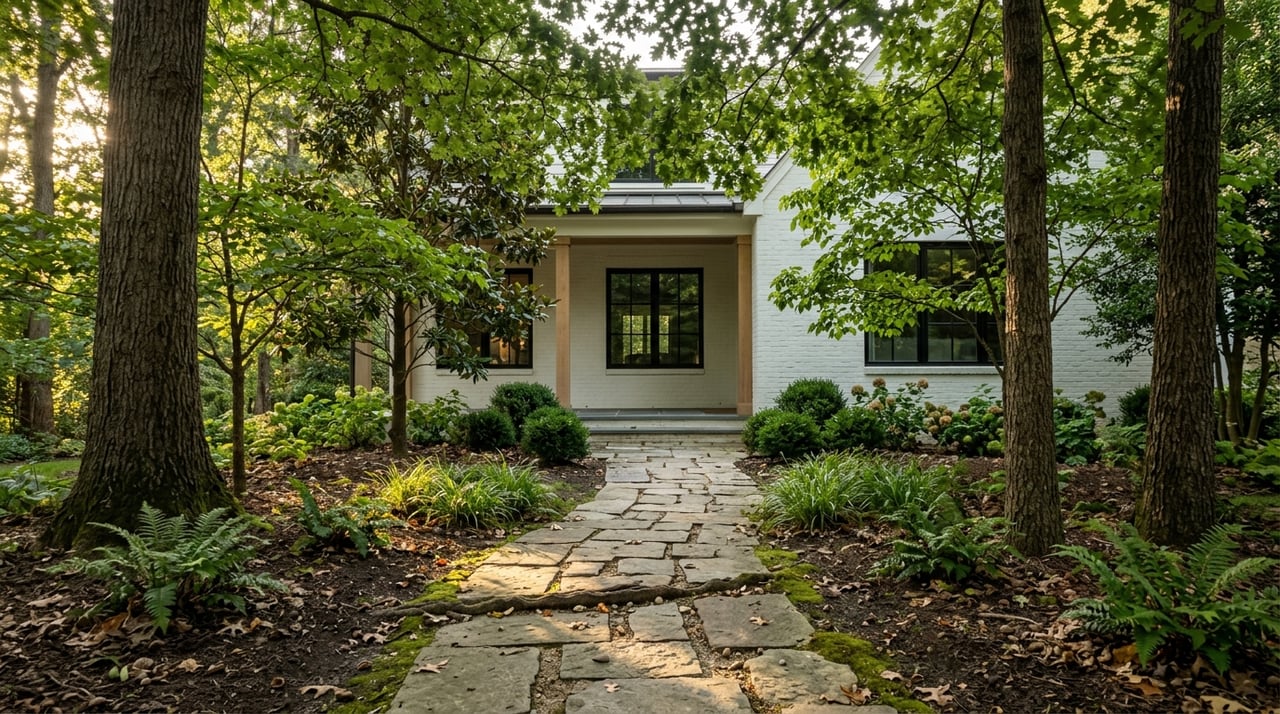
Forest Hills is a strong match if your ideal routine centers on home, outdoor space, and a quieter rhythm. It is less about stepping out to a row of shops and more about enjoying a residential setting with mature trees, larger lots, and a bit more separation from commercial activity.
That also means most errands and services are likely to involve driving outside the city. Based on location, nearby areas such as Green Hills and Brentwood often serve as the practical draw for shopping, dining, and day-to-day conveniences.
If you love the idea of coming home to a calmer setting after a busy day, that tradeoff may feel worthwhile. If you want a walkable town-center feel, Forest Hills may feel too quiet or too car-oriented for your next chapter.
The natural setting is one of Forest Hills’ defining features. The city places a strong emphasis on preserving trees, hillsides, and open space, and that directly shapes how the community looks and feels.
Much of the land lies on hillsides and steep slopes. The city’s Woodland and Tree Ordinance requires permits for most tree removals, prohibits clear-cutting of lots, and sets canopy ratios for residential zoning districts.
For many buyers, this is exactly the point. The tree canopy and rolling terrain help create a secluded, nature-forward atmosphere that can feel distinct from more typical suburban development.
Still, the beauty comes with responsibility. If you own property here, landscaping and site changes may face more scrutiny than they would in a conventional subdivision, especially when changes affect trees, slopes, or land forms.
If you are drawn to wooded homesites, it helps to look beyond curb appeal. In Forest Hills, topography and site conditions can affect both lifestyle and upkeep.
The city’s planning materials track forested areas, slopes, waterways, floodplain, topography, and parcels with potential for subdividing. The city also notes that Richland Creek, Otter Creek, and Sugartree Creek run through Forest Hills.
That means parcel-specific floodplain and drainage review can matter on some properties. Before you fall in love with a private, tree-filled lot, it is wise to understand how slope, water flow, and permitting requirements could affect future plans.
Forest Hills offers a strong connection to outdoor spaces. The city’s parks page highlights Bison Meadow, a 2.5-acre wildflower park on Hillsboro Pike, and the John C. Lovell Bikeway, which runs 1.5 miles from Percy Priest Elementary to Radnor Lake.
Forest Hills also borders Radnor Lake State Natural Area and the Warner Parks. The city describes Radnor Lake as 1,200 acres of forests and hiking trails around a tranquil lake, while the Warner Parks include a nature center, trails, and picnic areas.
If your idea of quality of life includes time outdoors, this is one of Forest Hills’ strongest lifestyle advantages. You are not choosing a retail-centered setting here. You are choosing a place where nature is a visible part of everyday life.
For move-up buyers, Forest Hills can offer something more meaningful than just more square footage. It may provide a sense of retreat, privacy, and visual calm that feels hard to find in busier parts of the Nashville area.
The city’s low density, residential-only pattern, and emphasis on trees and slopes all support that experience. If your priority is a home environment that feels established and protected, Forest Hills stands out.
The key question is whether that setting aligns with how you actually live. If you value residential privacy and natural surroundings more than in-neighborhood retail convenience, Forest Hills may feel like a smart next step.
Downsizing does not always mean giving up quality or character. In Forest Hills, it may mean shifting into a quieter setting that still offers a sense of space and a strong connection to the landscape.
That said, downsizers should think carefully about maintenance and property management. A wooded lot can be beautiful, but trees, slopes, drainage, and site rules may add responsibilities that feel different from life in a simpler subdivision or more lock-and-leave setup.
If you want a peaceful residential setting and do not mind the tradeoffs that come with it, Forest Hills can be very appealing. If ease and low exterior upkeep are top priorities, you will want to evaluate each property with care.
For families considering Forest Hills, one useful factual detail is that Percy Priest Elementary is the only public school within Forest Hills city limits, and it is part of Metro Nashville Public Schools.
MNPS advises families to confirm school assignment through its address-based Zone Finder. In other words, school zoning should be verified property by property rather than assumed based on city location alone.
That kind of parcel-level detail matters in Forest Hills generally. From school assignment to site conditions, this is a market where the specifics of an individual property can shape the decision.
Forest Hills is a compelling option if you define your next chapter as more privacy, more trees, and less commercial activity. It offers a small-city residential setting with a strong sense of natural character and a more controlled approach to land use.
It is likely a better fit for you if you want:
It may be less compelling if you want:
The right move is not just about the house. It is about how you want your days to feel once you are there.
If you are weighing Forest Hills against other Nashville-area neighborhoods, a clear, property-by-property view can make all the difference. Antonia Nelson offers thoughtful buyer and seller guidance, strategic preparation, and the calm local insight that helps you choose your next chapter with confidence.
Stay up to date on the latest real estate trends.
Franklin
How to find the Franklin neighborhood that fits the way you actually want to live
Receive expert guidance on accurately evaluating property value, preparing a strong and highly competitive offer, handling contracts with confidence, and navigating every step of the buying or selling process with ease. Reach out to Antonia today to confidently achieve your real estate goals and make informed decisions!